Showing posts with label science. Show all posts

Tuesday, November 8, 2011

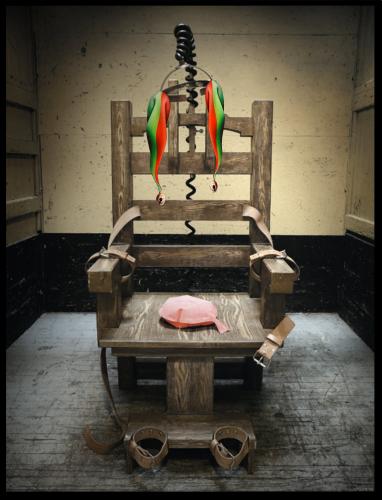
Guest Post: Invention of the Electric Chair

Dentist Alfred P. Southwick is famously known as the creator of the electric chair, a method widely known for executing criminals and accused people.


The story goes that one day, the dentist saw a highly intoxicated fellow touching a live electric generator. The man died an extremely quick death. After having witnessed this, the dentist came to a conclusion. He studied that the conduction of electricity could result in the death of a living being. Since his profession had him perform all medical procedures by making his patients sit on the chair, he came up with the unique idea of an electric chair.

Alfred P. Southwick along with the Governor of New York state, David B. Hill worked tremendously hard to make the law of execution on an electric chair legal and recommended that death by electrocution should be made a legal form of capital punishment.

Finally, on January 1st, 1889 the law went into effect and on August 6th, 1890 the electric chair claimed its first victim, William Kemmler.
 
This guest post has been written by the research group from HappyHealth

Monday, March 14, 2011

On March 19th, the Moon will be the closest it has been to Earth in 18 years.


Moon

The moon - stalking the Earth since 4.4 billion BC. Picture courtesy NASA
In fact, the Moon will only be 221,556 miles away! This event, called a lunar perigee, is a source of contention between scientists and astrological theorists. Some believe that having the Moon so close can cause all sorts of natural disasters, such as the 1938 New England hurricane, Cyclone Tracy in 1974, and Hurricane Katrina in 2005 - all events which fell on or near the appearance of a “SuperMoon.”


Monday, February 28, 2011

Apple’s original logo featured Sir Isaac Newton.

This first logo was designed by Ron Wayne, one of Apple’s three co-founders, and was only used for the Apple I computer. More of a picture than a logo, it portrayed the famous scene in which Isaac Newton is pondering gravity beneath an apple tree. Less than a year later, Steve Jobs, another co-founder, requested a redesign because he felt it was too intellectual and far too intricate to be stamped on computers.

The newer logo, created by art designer Rob Janoff, was far more simplistic - it featured a partially bitten apple striped with the colors of the rainbow in the wrong order. This served as Apple’s primary logo for 20 years until 1997 when Jobs decided to ditch the rainbow stripes for a solid-colored fruit.

Monday, February 21, 2011

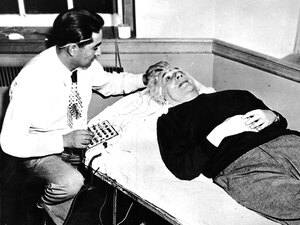
Albert Einstein’s brain was stolen after he died.

Tiny metal electrodes are attached to Albert Einstein's head
Tiny metal electrodes are attached to Albert Einstein's
head to pick up impulses from his brain and to
magnify and record them for study in 1950 in
Princeton, N.J. Dr. Alejandro Arellano kneels
beside him.


The man who performed the autopsy on Einstein’s body shortly after he died was a Princeton pathologist by the name of Thomas Harvey. Harvey removed the brain for examination, as is customary during autopsies, but he never replaced it. At the cost of his job and reputation, Harvey instead placed it in a jar of formaldehyde and took it home!


Elephants are afraid of mice. (Watch the video!)

...or at least they are very careful to avoid them. The guys on Mythbusters proved this myth to be plausible - check it out in the video below!

Friday, February 18, 2011

The human nose can distinguish more than 10,000 different smells.

There are hundreds of different kinds of neurons in the nose that specialize in recognizing different odors and transmitting those signals to the brain. This occurs when molecules of the things that you can smell travel to your nose. Whatever thing you are smelling (a flower, a piece of fruit, an onion, etc.) gives off light, volatile chemicals called odorants that make their way to your nose as they evaporate. These chemicals trigger the neurons in your nose that allow you to recognize the smell. Specialized smell neurons exist to pick up on different kinds of smells, allowing us to distinguish between over 10,000 different odorants.
 
Source: How Stuff Works

Monday, February 14, 2011

The world’s largest touch screen is 10 meters long and can accept up to 100 multi-touch inputs at one time. (See the video!)

The screen was developed by a group at the University of Groningen in the Netherlands. In order to create the behemoth, the school modified a 3D theatre’s screen using infrared lamps and cameras. The screen is used to teach students interactivity.


Thursday, February 10, 2011

Dogs do NOT see in black-and-white.

Yes, dogs are partially colorblind, but that does not mean they do not see any color at all! Man’s best friend suffers from a kind of colorblindness that is called deuteranopia in humans. Both people and dogs have three different varieties of color receptors in their eyes: one for red, one for green, and one for blue. Deuteranopes, and similarly all canines, do not have the green color receptor and therefore cannot tell the difference between shades of green and other colors!


Sunday, February 6, 2011

The “Invisibility Cloak” is becoming a reality. Watch the video!

Scientists in Birmingham have been designing an invisibility cloak (more precisely, a lump of crystal) that can make objects seemingly disappear. The cloak bends light to obscure small objects behind it, making it seem invisible, while also appearing to be flat. So far, the largest items that it can conceal are things like paperclips, while the cloak itself is roughly the size of a paperweight, much larger than what it is concealing.


Conceptually, a seven-meter wide cloaking crystal could by used to make something like a large dog invisible. So far this is the biggest enhancement in invisibility cloaking technology, and the technology is still improving.


You can see a video of the device in action, making a paperclip turn invisible!

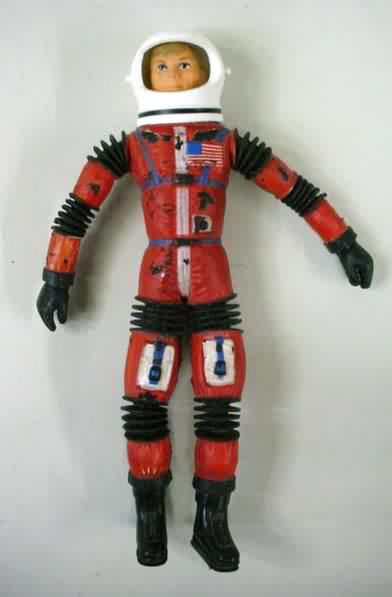
Astronauts grow taller in space.

Believe it or not, this is true! On space missions of 12 weeks or longer, astronauts have been known to grow up to an additional two inches taller! For this reason, space suits are fitted to each astronaut with two inches of room to grow. The reason for this phenomenon is not known for certain, but scientists believe it is due to the lack of gravity in space. This weightlessness can also cause astronauts to lose bone mass! The lack of gravity prevents the compression of the spine which would otherwise occur on Earth. Once fully extended, the spine can apparently lengthen up to 2 full inches!

Source: Helium


Tuesday, January 25, 2011

A new type of glass has been invented that is stronger than steel.

Image: Glass
The new metallic glass is a microalloy that features palladium,
a metal with a high "bulk-to-shear" stiffness ratio that
counteracts the intrinsic brittleness of glassy materials.
Not only is the glass stronger than steel, it is actually more durable than any known substance! This new “superglass” is a microalloy composed of palladium, a metal that has a high stiffness ratio and bends instead of cracking in response to high levels of physical stress. Glass samples cannot be more than a few millimeters thick due to the rapid cooling involved in its creation, but scientists are confident this breakthrough will lead to even stronger and more durable types of glass in years to come.

Source: MSNBC

Monday, January 24, 2011

The average human heart beats 100,000 times each day.

All this expanding and contracting pushes around 2,000 gallons of blood through the human body! Over a 70-year lifetime, the average human heart will beat more than 2.5 billion times. If all our blood vessels were laid end-to-end, they would stretch for about 60,000 miles - circling the planet more than two times!


Monday, January 17, 2011

The 3rd astronaut on Apollo 11 never got to walk on the moon.

 
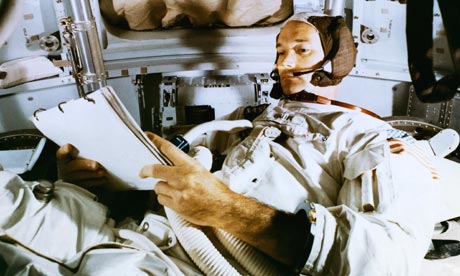
Michael Collins
Michael Collins, command module pilot of the Apollo 11 lunar landing mission.

While Neil Armstrong and Buzz Aldrin received the honors of being the first and second man to walk on the moon, their other crew member had to wait in the ship! This man, Michael Collins, may have had the toughest assignment of all! Collins had to wait behind in the mothership all alone while Armstrong and Aldrin explored the lunar surface. While the other two were down below, Collins also passed behind on the dark side of the moon (the furthest distance any human has been from Earth!) - and out of radio communication for quite some time. If something had gone wrong with the lunar lander’s engine, Buzz and Neil could have easily been stranded to die on the surface of the moon.


This would have meant that Collins would have had to pilot the ship back to Earth by himself! He also believed that such a tragedy would have left him a “marked” man for life, since he would have returned as the lone survivor. Fortunately, the Apollo 11 mission was a success and President Richard Nixon did not have to read the speech he had prepared in case of a tragedy!


While he may end up getting less recognition in the history books, the legendary airman Charles Lindburgh wrote to Collins telling him that his mission had "greater profundity ... you have experienced an aloneness unknown to man before".

Source: Guardian, UK

Saturday, January 15, 2011

The world’s smallest book must be read using an electron microscope.

This first-ever nanoscale book was published as a work of art in April 2007. This book, called Teeny Ted from Turnip Town, measures 0.07 mm by 0.10 mm!! Each letter was carved on a polished piece of single crystalline silicon by a focused-gallium-ion beam. The beam had a minimum diameter of about 7 nanometers, or only 70 ATOMS!! The story is written on 30 microtablets, each measuring at about 11 by 15 microns.


Source: Nanowerk

Saturday, December 4, 2010

Pumice is the only rock that floats on water.

It will eventually become waterlogged and sink though!

Friday, July 23, 2010

Our sun is so big that 1 million earths could fit inside of it. On the other hand, the largest star known to man is called VY Canis Majoris which could house 9,261,000,000 Suns

If VY Canis Majoris were put in our sun's place it would extend past Saturn. VY Canis Majoris can also fit 7×10^15 Earths inside of it (that's 7 with 15 zeros after it.)

Thursday, July 22, 2010

In the 1950s, the United States planned to drop a nuclear bomb on the moon

At the time, the US was lagging behind the Soviet Union in the space race (For example, they sent a man into space before the US did.) Exploding a nuclear weapon on the moon was a way to one-up the Soviet Union. They planned on nuking the moon as a PR stunt, and they wanted to make sure the explosion could be seen from Earth!

This was part of a top-secret Air Force project, "Project A119" which was called "A Study of Lunar Research Flights". Details of the 1958 plan were made public in 2000 by Dr. Leonard Reiffel, the physicist who ran the project. He had worked on the project with famous astronomer Carl Sagan.
Sagan may have also disclosed some of this top-secret information when he applied for the prestigious Miller Institute graduate fellowship to Berkeley. At the time, Sagan thought that a nuclear explosion could reveal whether there was life on the moon.
The explosion likely would have ruined the face of the "man on the moon". Thankfully, years later they decided to send Neil Armstrong to the moon, and not a nuclear bomb.


Thursday, July 15, 2010

A tiger's tongue is so rough it can lick the paint off of a building

The tiger's tongue is covered with numerous small, sharp, rear-facing projections called papillae. These papillae gives the tongue is rough, rasping texture and is designed to help strip feathers, fur and meat from prey. Also, all tigers have a unique set of stripes, like fingerprints.

Tuesday, July 13, 2010

The hardest part of the human body is the enamel that covers the teeth.

This is important because underneath the enamel in your teeth is a soft pulp made of connective tissue, blood vessels, and nerve fibers. Bacteria in your mouth can produce an acid that wears out your enamel. When the acids dissolves the enamel and gets to the nerves, you'll get a really nasty toothache.

Thursday, July 8, 2010

What are those stars and colors we see when we rub our eyes called?

Have you ever wondered what's the name of those stars and colors that we often see when we rub our eyes or which suddenly come up when we get up in the morning? These little stars and colours are called Phosphenes.
Related Posts Plugin for WordPress, Blogger...